
PPP vs. CTPM
Internet Marketing Foundations

The Internet Marketing Muscle Map: PPP vs CTPM (And How to Actually Use It)


If you’ve been doing “a little SEO,” posting on social when you remember, tweaking your homepage, buying another tool, watching another affiliate video, and then wondering why nothing compounds…

Congrats. You’ve mastered random acts of marketing.

It feels productive because you’re always doing something. But your results look like a heart monitor for a houseplant.

You don’t need more tactics. You need a map — a simple framework that tells you what to do next, what to ignore, and why your “busy” isn’t turning into money.

Two maps do that better than anything else on this site:

  • CTPM (Content → Traffic → Pre-Sell → Monetize)
  • PPP (Publish → Promote → Profit)

Pick one, run it end-to-end, and you’ll start spotting bottlenecks like they’re glowing in the dark.

Start here if you’re brand new: https://internet-marketing-muscle.com/start-here/
And yes, you should be building your list: https://internet-marketing-muscle.com/subscribe/

The Problem: Random Acts of Marketing

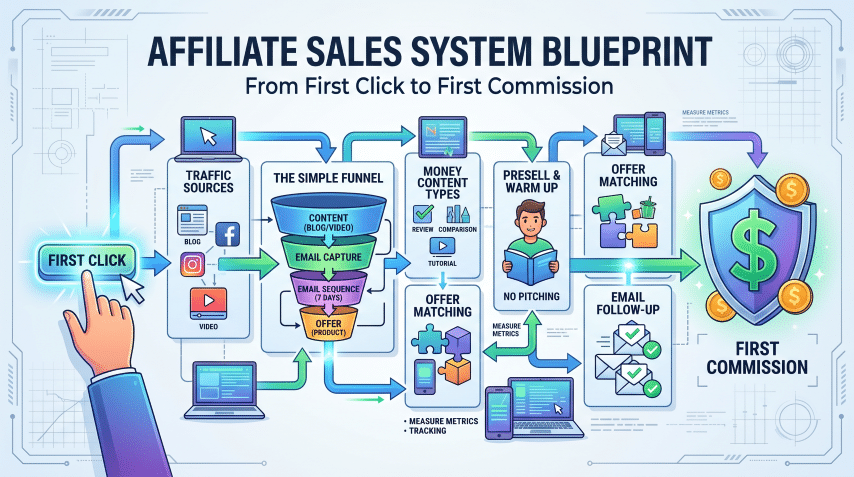
Uncoordinated tactics don’t create a path from attention → trust → clicks → cash.

They create noise.

And noise is the easiest thing to generate online. There’s a whole internet full of people generating noise like it’s their job. (Sometimes it literally is.)

Here’s what random acts of marketing look like:

  • You publish a post with no purpose.
  • You promote “a little” everywhere with no consistent loop.
  • You mention an offer once and hope it magically converts.
  • You change tools because you’re bored, not because you have a system.
  • You measure the wrong thing (or nothing), so you can’t diagnose what’s broken.

You don’t fix this by “trying harder.” You fix it by running one framework on purpose.

That’s what PPP vs CTPM are: rulebooks that force you to build a chain instead of a junk drawer.

Two Frameworks, One Game

PPP and CTPM aren’t rival religions. They’re two ways of describing the same game:

  • You create something valuable.
  • You get the right people to see it.
  • You earn trust before you ask for the click.
  • You monetize in a way that matches the promise.

The difference is how they help you think.

  • CTPM is a full funnel narrative. It keeps you honest about trust and sequencing.
  • PPP is a tight operating loop. It helps you execute fast and iterate like a grown-up.

Understanding the differences between PPP vs CTPM can significantly enhance your marketing strategy.

CTPM is best when you need compounding growth and long-term trust.
PPP is best when you need focus, speed, and measurable iteration.

And yes — you can use both. But only if you know which one you’re running right now.

CTPM Explained (Content → Traffic → Pre-Sell → Monetize)

CTPM is the “build the engine” framework.

Understanding the differences and applications of PPP vs CTPM will elevate your marketing strategy.

Content

Content is not “thought leadership.” Content is answers.

It’s publishing things people actually want:

  • How-to posts
  • comparisons
  • checklists
  • “what to do next” guides
  • system explanations

If you’re publishing content nobody searches for, nobody shares, and nobody cares about… that’s not noble. That’s just invisible.

(If you want the modern search reality, read this: https://internet-marketing-muscle.com/seo-aeo/seo-vs-aeo-in-2026-how-to-rank-in-google-and-get-cited-by-ai/)

Traffic

Traffic is not “post everywhere.”

Traffic is deliberate distribution:

  • SEO
  • email
  • social repurposing
  • partnerships
  • communities

And traffic isn’t just volume. It’s the right people arriving with the right expectation.

Pre-Sell

Pre-sell is where most internet marketers faceplant, because they go straight to “buy now.”

Pre-sell means you:

  • clarify the problem
  • show the path
  • handle objections
  • earn micro-commitments (subscribe, download, reply, click)

Pre-sell is the difference between “affiliate links everywhere” and actual conversions.

This one nails the concept fast: https://internet-marketing-muscle.com/copywriting-sales/the-60-second-trick-that-turns-any-post-into-a-pre-sell-machine/

Monetize

Monetize is last — because monetization works best when it’s the natural next step.

That could be:

  • affiliate offers
  • your own products
  • memberships
  • consulting
  • tools you use and recommend

If you monetize too early, you sound like every other MMO blog that “reviews” products they’ve never touched.

If you want the modern affiliate reality check: https://internet-marketing-muscle.com/affiliate-marketing/affiliate-marketing-in-2026-what-works-now-and-what-died/

PPP Explained (Publish → Promote → Profit)

PPP is the “run the loop” framework.

It’s what you use when you’re tired of theory and you want a weekly operating system.

Publish

Publish one focused asset.

Not five half-drafts. Not “content vibes.” One thing with one job:

  • rank for a query
  • pre-sell an offer
  • drive a lead magnet opt-in
  • convert a buyer

This is why your pillars matter:
https://internet-marketing-muscle.com/publish/

Promote

Promote is where most creators quietly die.

They publish… then they stare at the post like it owes them money.

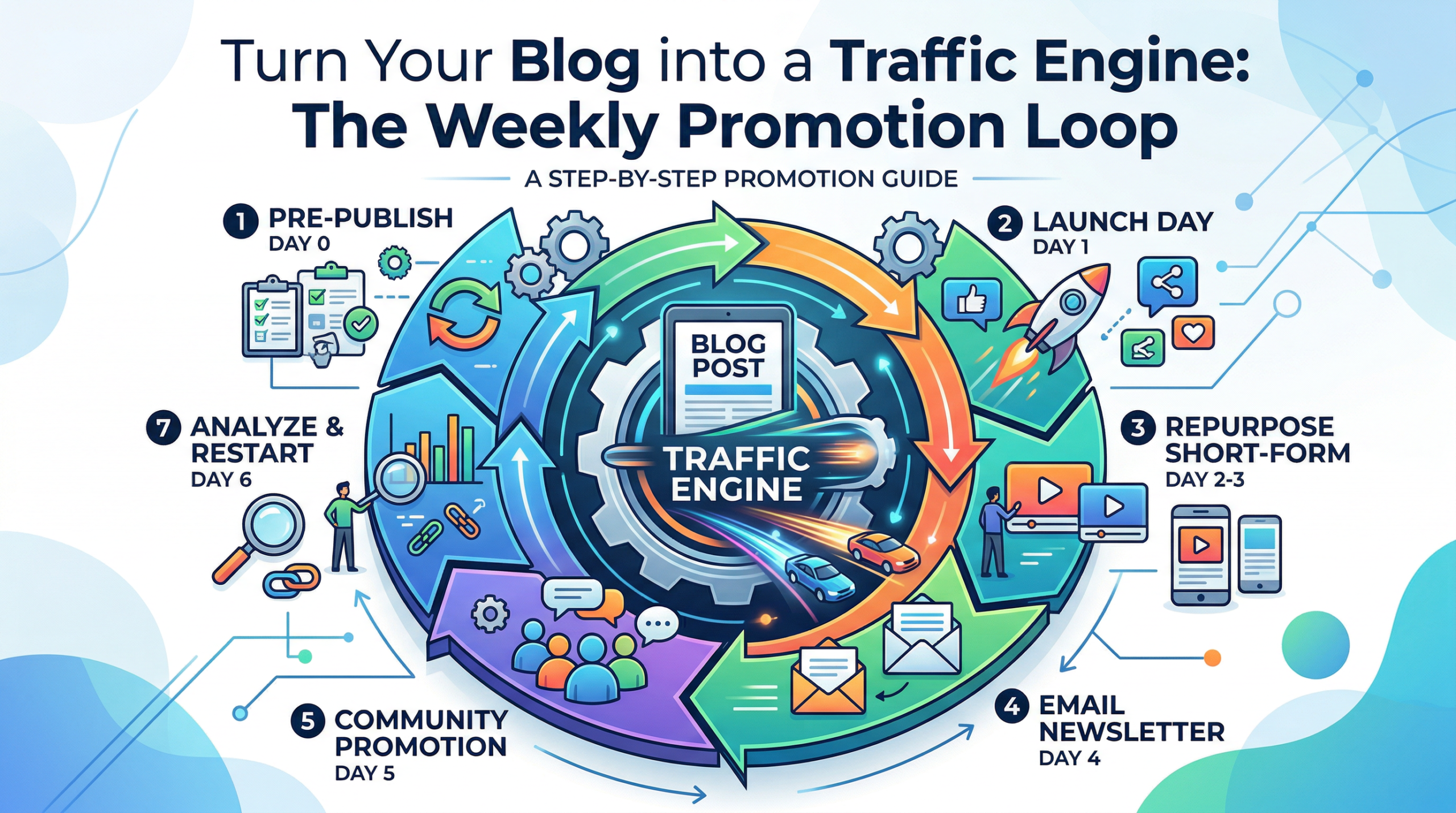
Promotion is a repeatable loop:

  • email your list
  • repurpose for social
  • link internally from relevant posts
  • add it to your hub pages
  • re-share later with a new angle

This is the stage most people skip, then blame the algorithm.
https://internet-marketing-muscle.com/promote/

Profit

Profit means you intentionally convert.

That means:

  • clear CTAs
  • relevant offers
  • smart internal links
  • follow-up (usually email)
  • tracking what actually drives action

And if you don’t have an offer yet? Your first offer can be affiliate. Just do it clean.
https://internet-marketing-muscle.com/profit/
Your products hub lives here: https://internet-marketing-muscle.com/sales/

The Overlay: How PPP Maps to CTPM

Here’s the “overlay” view — the cleanest way to understand how they relate:

  • PublishContent
    The asset you control.
  • PromoteTraffic
    The distribution you can repeat and scale.
  • ProfitPre-Sell + Monetize
    Persuasion + conversion, backed by follow-up.

This is why I like teaching both:

  • CTPM forces you to respect the full journey.
  • PPP forces you to stop “planning” and start shipping loops.

If you ever feel stuck, ask one question:

Which stage am I pretending I’m in?

Because most people are trying to “optimize Profit” when they haven’t even built a real Publish or Promote system yet.

Example #1: The Total Beginner

If you’re brand new, your biggest enemy is not failure.

It’s whiplash.

One minute you’re learning SEO. Next minute you’re setting up email automation. Then you’re 14 tabs deep into tool comparisons and somehow you still haven’t published a single piece of content.

Here’s the beginner move:

Run PPP for 30 days.

  • Publish: 3 useful posts that answer real questions in your niche
  • Promote: share each post twice (once when it goes live, once a week later)
  • Profit: pick one affiliate offer or lead magnet to connect to your content

Don’t try to build “a brand.” Build proof of motion.

Start here: https://internet-marketing-muscle.com/start-here/
Grab a free report so you have something to offer immediately: https://internet-marketing-muscle.com/free-reports/

And if you’re wondering what tools to use without going broke: https://internet-marketing-muscle.com/six-tools/

Example #2: Traffic Is Up, Money Is Not

This is the most common phase for bloggers and affiliate marketers.

Traffic goes up. Revenue doesn’t.

That usually means one of three things:

  1. Wrong traffic
    You’re attracting people who love reading but will never buy.
    Fix: tighten your topic selection and message-match your intro.
  2. No pre-sell
    Your content is informative but doesn’t move readers toward a decision.
    Fix: add intent blocks, objections, and “what to do next” CTAs.
  3. Weak offer connection
    You mention an offer like it’s an afterthought.
    Fix: make the offer the natural next step (and explain why).

If you want two great “bridge” concepts for monetization:

Then come back and ask: “Where is the leak — click, opt-in, or purchase?”

Example #3: The AI Tool Hoarder

AI can help you publish faster.

It can also turn you into a full-time settings manager.

If you have five writers, three dashboards, two email platforms, and none of them connect to a single offer…

You don’t have a marketing system. You have a subscription collection.

Here’s how to fix it using the map:

  • Publish: pick one primary workflow (outline → draft → polish → publish)
  • Promote: pick one repeatable distribution loop (email + 2 socials + internal links)
  • Profit: pick one monetization path (affiliate, product, lead magnet) and track it weekly

This is why your tools need to serve the system — not become the system.

If AI is your lane, start with:
https://internet-marketing-muscle.com/ai-for-marketers/build-your-ai-powered-blog-in-2025/

And don’t skip the “modern search” part:
https://internet-marketing-muscle.com/seo-aeo/seo-vs-aeo-in-2026-how-to-rank-in-google-and-get-cited-by-ai/

The Bottleneck Diagnosis (Find What’s Actually Missing)

Here’s the rule:

You’re not “bad at marketing.” You just have a bottleneck.

So diagnose it like a builder, not a vibes-based optimizer.

Pick one primary path, like:
Post → Opt-in → Follow-up → Offer

Then find the first steep drop.

If the bottleneck is PUBLISH

Symptoms:

  • inconsistent posting
  • lots of drafts, few published assets
  • unclear niche or unclear content purpose
  • content that doesn’t answer real questions

Fixes:

  • commit to one publishing cadence (even 1/week)
  • use a content system (traffic / pre-sell / list / sale)
  • build a real internal linking plan (stop orphan posts)
  • focus on “answer content,” not thought pieces

Start here:
https://internet-marketing-muscle.com/publish/

If the bottleneck is PROMOTE

Symptoms:

  • “I post but nobody sees it”
  • traffic spikes then disappears
  • you rely on one platform
  • you don’t re-share, repurpose, or email consistently

Fixes:

  • build a weekly promotion loop
  • repurpose every post into multiple assets
  • use internal links to create compounding traffic
  • build your list so you have direct distribution

Start here:
https://internet-marketing-muscle.com/promote/
And yes, build your list:
https://internet-marketing-muscle.com/subscribe/

If the bottleneck is PROFIT

Symptoms:

  • traffic but low clicks
  • clicks but no opt-ins
  • opt-ins but no sales
  • unclear CTA, weak offer connection, no follow-up

Fixes:

  • strengthen pre-sell (objections + “what to do next”)
  • move CTAs closer to intent blocks
  • match offers to the exact promise of the content
  • follow up by email like you actually want this to work

Start here:
https://internet-marketing-muscle.com/profit/
Offers hub:
https://internet-marketing-muscle.com/sales/
Free lead magnets (to build your list while you build your offers):
https://internet-marketing-muscle.com/free-reports/

FAQs:

How do I know whether to use PPP or CTPM?

Use CTPM when your main problem is attention and trust (you need people to find you, stick around, and believe you). Use PPP when your main problem is execution and iteration (you need a weekly loop you can run, measure, and tighten). If you’re not sure, start with PPP for 30 days so you stop drifting.

Can I use PPP and CTPM at the same time?

Yes — but only if they’re doing different jobs.
CTPM is your “full journey” lens (content → traffic → pre-sell → monetize). PPP is your “weekly operating loop” (publish → promote → profit). The mistake is mixing them without defining the objective, which creates mismatched content, weak CTAs, and confused promotion.

What if I’m getting traffic but no clicks or sales?

That’s almost never “bad luck.” It’s usually message-match, pre-sell, or offer fit.
Fix in this order:

  1. tighten the promise (headline + intro),
  2. add pre-sell blocks (objections + next-step CTAs),
  3. make the offer the natural next step,
  4. follow up by email.

What’s the fastest way to find my bottleneck?

Pick one path and trace it: Post → Opt-in → Follow-up → Offer.
Then find the first steep drop:

  • impressions → clicks (Publish/Promote issue)
  • clicks → opt-ins (Pre-sell/offer clarity issue)
  • opt-ins → sales (Profit/follow-up issue)
    Fix the first drop before you “optimize” anything else.

I’m overwhelmed — what should I do first this week?

Do one simple PPP cycle:

  • Publish: one useful post (or improve your best existing one)
  • Promote: email it + share it twice + add 3 internal links
  • Profit: add one clear CTA to Subscribe/Free Reports (or a relevant offer)
    Then repeat next week. Consistency beats hero mode.

Your Next Step: Pick Your Stage and Move

Here’s how you get unstuck fast:

Pick the stage you’re in — and do the matching work.

If you need PUBLISH

Read: https://internet-marketing-muscle.com/publish/
Then write one useful post this week. One. Not five drafts.

If you need PROMOTE

Read: https://internet-marketing-muscle.com/promote/
Then run a simple weekly loop: email + repurpose + internal links.

If you need PROFIT

Read: https://internet-marketing-muscle.com/profit/
Then add one clear CTA to your best post and follow up with your list.

If you’re not sure which stage you’re in, start here:
https://internet-marketing-muscle.com/start-here/

Grab a free report so you have a clean next step for readers:
https://internet-marketing-muscle.com/free-reports/

And if you haven’t subscribed yet… stop pretending you’re above email lists:
https://internet-marketing-muscle.com/subscribe/

Finally, read more about internet marketing foundations here.

Read More
SEO vs AEO in 2026: How to Rank in Google and Get Cited by AI
SEO & AEO

SEO vs AEO in 2026: How to Rank in Google and Get Cited by AI

In 2026, “ranking” is not the whole game. You’re not just competing for blue links anymore—you’re competing to be the answer and the source that gets cited.

So here’s the practical reality:

  • SEO gets you discovered in search.
  • AEO gets your content extracted, summarized, and cited by AI answers.

If you want traffic and trust, you need both.


Key Takeaways

  • Use a dual strategy: SEO for rankings, AEO for extraction-ready answers and citations.
  • Map every post to intent: learn / compare / buy / fix—then build headings to match.
  • Add “information gain” beyond the top results: tables, checklists, comparisons, real examples.
  • Improve verifiability: named sources, dates, definitions, and reproducible steps.
  • Build topical authority: topic clusters + internal linking that feels like a system, not a junk drawer.

SEO vs AEO in 2026: What’s the Difference (and Why You Need Both)

Why does “ranking on Google” feel less predictable now? Because you’re not only competing with other websites—you’re competing with answers.

SEO (Search Engine Optimization) = optimizing pages to rank in search results (keywords, structure, links, authority).

AEO (Answer Engine Optimization) = structuring content so AI systems can extract, trust, and cite your answers quickly.

You need both if you want:

  • traffic from search and citations that pre-sell clicks (and trust) before someone ever lands on your page.

If you’re building your site around PPP, this is part of Publish:

  • Publish content that ranks and gets cited
  • Promote it so it doesn’t “die quietly”
  • Profit because visibility without conversion is just… busywork

If you haven’t already, go read these pillar pages:


How Google Rankings Work Now (the Parts People Ignore)

In 2026, you win when your page proves three things:

  1. You understand the job-to-be-done behind the search
  2. You add information gain beyond what’s already on page one
  3. You make verification painless

Here’s your weekly checklist:

  • Map intent: is the searcher trying to learn, compare, buy, or fix?
  • Add information gain: one original table, a checklist, a “best for X” breakdown, or a real comparison.
  • Make entities explicit: define terms, name tools, include dates where relevant.
  • Improve cite-ability: short direct answers under H2s, scannable bullets, consistent formatting.

That’s how you win rankings and get your content used in answers without playing gimmick games.


How “Answer Engines” Choose Sources to Cite

Answer engines don’t “rank pages” the same way humans browse results.

They select claims to cite—and they prefer sources that make those claims:

  • easy to extract
  • easy to understand
  • easy to attribute
  • easy to trust

Think like a citation, not a blogger.

If your post buries the answer, skips definitions, or makes bold claims without anything to back them up, you won’t get picked.

They’ll cite you more often when you deliver:

  • Clear claims: one-sentence answers, tight scope, consistent terms
  • Verifiability: named sources, dates, reproducible steps
  • Attribution signals: author identity, topical consistency, internal links inside a cluster

Common mistake: chasing “viral angles” instead of publishing stable, testable information your audience actually reuses.

Simple implementation: put an Answer line under each major H2. Make it obvious.


The 2026 Content Structure that Wins SEO and AEO

Use this structure for most posts (especially cornerstones):

  • H1 = outcome + context (example: “SEO vs AEO in 2026: Rank and Get Cited”)
  • Above-the-fold TL;DR: 3 bullets + who it’s for
  • Definitions early: don’t make AI (or readers) guess what you mean
  • Proof blocks: sources, dates, “last updated,” and real steps
  • Scannable H2s: criteria, comparisons, steps, mistakes, verdict
  • Citable snippets: tables, lists, 40–70 word “mini summaries”
  • FAQ (5 questions) with direct answers

Common mistakes:

  • burying the answer
  • vague headings (“Everything You Need to Know…”)
  • no internal linking
  • fluffy filler intros
  • outdated info with no update note

Topic Clusters: The Fastest Way to Build Topical Authority

One-and-done posts can still rank.

But topic clusters win more consistently because they make your site feel like a library, not a collection of random blog posts.

Once you’ve published the cluster, you still have to get eyeballs on it—because “publish and pray” is not a strategy. That’s where Promote comes in.

And when your cluster starts pulling the right kind of traffic, the Profit pillar is how you turn those visits into subscribers, clicks, and commissions—without getting salesy.

A topic cluster = one hub topic + supporting posts that answer sub-questions beginners actually ask.

Example cluster for your site:

  • SEO vs AEO (cornerstone)
  • Internal linking blueprint
  • Topic clusters 101
  • On-page SEO checklist
  • Schema basics
  • Entity SEO basics

When you build like this, you set yourself up to:

  • Publish better (structure and intent)
  • Promote easier (more angles, more shareable pieces)
  • Profit cleaner (more intent coverage, better paths to offers)

Internal Linking Rules that Make Your Site Feel Organized

Internal links are not decoration. They’re navigation.

Here are the rules I want you to follow (yes, rules):

Rule 1: Link with intent.
If a link doesn’t help someone take the next step, cut it. You’re building rails, not confetti.

Rule 2: Keep anchor text consistent.
Pick one label per destination and stick to it. Consistency helps humans and machines understand what a page is about.

Rule 3: Close the loop.
Every spoke links up to the hub, and the hub links back to the best spokes.

Baseline target: 3–5 contextual links per post.

Common mistakes:

  • orphan pages
  • “click here” anchors
  • random cross-topic links that dilute relevance

Do this right and your site starts to feel like a system. (Because it is.)


On-Page SEO in 2026: What Still Matters (and What’s Noise)

On-page SEO isn’t keyword stuffing. It’s clarity.

What still matters:

  • One page, one job: match intent and answer the query fast
  • Proof beats polish: author identity, update date, sources, honest pros/cons
  • Machine-readable basics: clean URLs, scannable formatting, compressed images, logical headings

Noise to ignore:

  • keyword density games
  • “LSI keyword” obsession
  • filler intros that say nothing for 300 words

Write pages people would share without apologizing.


AEO Boosters: FAQs, Definitions, and Answer-Ready Sections

If you want AI answers to quote you, you need answer-ready blocks.

That means: define first, then prove, then give steps.

Keep each “answer” block around 40–70 words:

  • lead with the conclusion
  • keep the language direct
  • avoid qualifiers and hedging (“maybe,” “often,” “kind of”)

Here’s a simple framework:

BlockDo this
Definition1 sentence + who it’s for
FAQQuestion as H3, answer in 2–3 lines
Steps3–7 bullets, verb-led
ExampleMini outline: H2 → H3 → bullets
TL;DR1–2 lines, no fluff

Common mistake: burying answers under “story time.”


AI Content Without AI Slop: The Quality Control Checklist

If your content smells like templated filler, it won’t win trust—human or machine.

Use AI as a multiplier, not a replacement.

Run this QC checklist before you publish:

  • Specificity test: replace generic claims with at least one concrete example (tool, SERP feature, template, or step).
  • Originality proof: add one opinionated takeaway and one “here’s what I’d do instead.”
  • Trust signals: cite sources where you’re making claims, and make your headings match the search intent.
  • Voice check: delete any sentence that could belong on 500 other marketing blogs.

Common mistakes:

  • keyword-stuffed intros
  • fake stats
  • recycled “best of” content
  • robotic tone shifts mid-article

You’re building a brand, not a content factory.


Your Next Steps: A 7-Day Plan to Upgrade Any Post

Forget someday. Give me seven days and one existing post.

Day 1: Pull Search Console queries (or at least review your top impressions). Pick 1 primary query + 3 related questions.
Day 2: Rewrite the intro to answer fast; add a 40–70 word “answer-ready” summary.
Day 3: Add 3 proof points (examples, citations, screenshots, steps, or update notes).
Day 4: Improve intent match: add a comparison table or a clear recommendation section.
Day 5: Add 5 FAQs (who/what/when/why/how).
Day 6: Add internal links: 2 up (pillar + category), 2 sideways (related posts), 1 down (CTA/report).
Day 7: Update title/meta; resubmit in GSC if you use it; promote once.

Then follow your system:

And grab the report that supports better structure and faster publishing:


Frequently Asked Questions

Do I need schema markup for AEO, or is it optional in 2026?

You don’t need schema to be cited, but it helps search engines interpret your content. Start simple: FAQ schema on posts with real FAQs. Don’t turn it into a religion.

How do I track AI citations from Google AI answers and ChatGPT?

You won’t get perfect tracking (anyone promising that is selling snake oil). What you can do: watch referral spikes, brand mentions, and which pages start getting discovered via weird query patterns. Keep a simple weekly log.

Should I block AI crawlers, or does that hurt my traffic?

Blanket-blocking usually costs reach. If you’re going to block anything, block thin or low-value pages. Keep your best content accessible, well-structured, and clearly attributable.

Can affiliate sites win AEO without original data or tools?

Yes. You win by being specific, verifiable, and useful: clear definitions, buyer guidance, real comparisons, and citations when you make factual claims.

How do I optimize for local SEO and AEO at the same time?

Only relevant if you’re doing local business content. If you are: keep NAP/GBP consistent for local SEO, then add FAQ blocks, review snippets, and clear “answer-ready” sections for AEO.


Conclusion

You don’t have to rebuild your site—you have to rewire it.

Topic clusters are the map. Internal links are the signposts. Answer-ready blocks are the clearings where AI can extract and cite your content without guessing.

Make intent obvious. Make claims checkable. Make structure scan-friendly.

Then ship.

If you want a real example of this applied to monetization, start here: Affiliate Marketing in 2026.

Want more on this? Browse the SEO & AEO hub here.

Read More
affiliate marketing in 2026
Affiliate Marketing

Affiliate Marketing in 2026: What Works Now (and What Died)

Affiliate marketing in 2026 isn’t “dead.” It’s just done pretending.

The old playbook—cookie crumbs, last-click fantasies, and generic “best of” lists written by people who’ve never used the product—still exists… it just converts like a fax machine.

Here’s what works now, what died, and the simple system to build affiliate income without sounding like a carnival barker.


Key Takeaways

  • Cookies and last-click “credit” are fading fast—so you need clean tracking you can control (UTMs, link IDs, email list, on-site behavior).
  • Generic affiliate sites aren’t dead; generic content is. Micro-niches + use-case content wins.
  • Trust beats polish. People buy from proof (experience, screenshots, demos), not “optimized hype.”
  • The winners run a loop: PublishPromoteProfit—not “post and pray.”
  • AI can speed up drafts, research, and repurposing, but it still needs a human who’s willing to say what’s true.

Affiliate Marketing in 2026: The New Rules of the Game

Let’s get real: affiliate marketing is still one of the best business models for beginners and intermediates because you can start without inventory, fulfillment, or customer support.

But 2026 rewards a different skill set:

  • Clarity over volume (tight niche, specific problems, specific use cases)
  • Proof over persuasion (show, don’t sell)
  • Systems over inspiration (a repeatable weekly loop)
  • Owned assets over rented attention (email list beats algorithm mood swings)

If your affiliate plan depends on “hoping the platform credits you,” you don’t have a plan. You have a prayer.


What Died (and Why It Deserved It)

Some tactics didn’t “stop working.” They stopped working for people who were never building trust in the first place.

Cookie-dependent tracking fantasies

Affiliate tracking still exists, but it’s not 2009. Browsers, platforms, and privacy rules have been tightening for years. If your entire strategy is “get the click and hope I get credit,” you’re building on sand.

Last-click worship

Last click was always a dumb measuring stick. It ignores the content that created the decision and rewards whoever happened to be the final stop. In 2026, you need to think like a marketer: assist value matters, and your best hedge is building channels you can measure directly.

Generic “Best of” listicles with zero experience

The internet is drowning in “best of” posts written by people who are basically re-typing Amazon listings. Those aren’t authority posts—they’re content-shaped spam. Google knows. Readers know. You know.

Hard-sell, polished promo copy

Over-produced persuasion is getting weaker. If your content sounds like a brochure, it gets treated like a brochure: skimmed, ignored, and forgotten.


What Still Works If You Do It Clean

Here’s the good news: the fundamentals still work if you’re not trying to cheat the game.

Micro-niches win

Don’t “do fitness.” Do at-home strength training for busy dads with cranky knees.
Don’t “do marketing.” Do affiliate marketing for beginner bloggers who hate social media.

Micro-niche doesn’t mean tiny income. It means focused trust.

Proof-based content wins

Screenshots. Demos. Real pros/cons. “Here’s what surprised me.” “Here’s what I’d do differently.”

You don’t need to be a guru. You need to be believable.

Email still wins

Email is still the best hedge against platform nonsense. If you’re not building a list, you’re renting your entire business.

Relationships beat “spray and pray”

Even if you never negotiate a custom deal, you can still win by promoting fewer offers better. Depth > breadth.


What Works Better Now: The 2026 Playbook

Affiliate marketing in 2026 is less “SEO trickery” and more “content + conversion + trust.”

Here’s what’s working better than the old model:

Use-case content instead of generic rankings

Instead of “Best email marketing tools,” publish:

Use cases create relevance. Relevance creates clicks. Clicks create money.

Short-form + community as distribution, not as the business

You don’t need to become an influencer. But you do need distribution loops:

  • short clips → longer explanation
  • longer explanation → email sign-up
  • email → offers + evergreen posts
  • evergreen posts → more clips

That’s a system. Not a hustle.

AI as a multiplier, not a replacement

Use AI to:

  • generate first drafts
  • create outlines
  • repurpose content
  • draft promo angles
  • summarize pros/cons

But you still need to be the adult in the room:

  • verify claims
  • add real experience
  • write the final opinion

AI can write words. It can’t build trust.


The Simple 3-Step System: Publish → Promote → Profit (Affiliate Edition)

Here’s the part most affiliates never do: they never choose a system.

Publish

Create content that earns trust and answers real questions:

  • reviews (with real pros/cons)
  • comparisons (with use-case guidance)
  • “best for X” lists (with exclusions and reasoning)
  • how-tos that naturally lead to tools/products

Promote

Don’t rely on “publish and Google will send traffic.” Promote using a repeatable loop:

  • YouTube (or short clips) → blog post
  • blog post → email opt-in
  • email → back to content + offers
  • Skool/Facebook → discussions that feed new content ideas

Profit

Profit comes from:

  • matching the right offer to the right intent
  • using presell frameworks (so the link isn’t awkward)
  • building a simple email sequence that warms people up

If you want the shortcut for the “Profit” step, grab this:
Affiliate Promo Builder Engine: https://reports.internet-marketing-muscle.com/affiliate-promo-builder-engine

(Yeah, I’m biased. It works.)


Content That Converts: Reviews, Comparisons, and “Best Of” Posts

Here’s the simplest way to think about it:

Reviews convert when they include:

  • who it’s for / not for
  • real wins and real annoyances
  • what you’d do differently
  • proof (screenshots, steps, results—anything tangible)

Comparisons convert when they include:

  • a “winner by use case” section
  • what matters (and what doesn’t)
  • pricing notes + update date (build trust)

Best-of posts convert when they’re not lazy:

  • categorize by situation (beginner, budget, power user, etc.)
  • include exclusions (“Why X didn’t make the list”)
  • make the decision easier, not longer

If your “best of” post reads like a shopping catalog, don’t be shocked when it earns catalog-level trust.


Traffic That Doesn’t Collapse: Loops, Not Luck

Algorithms are moody. SEO takes time. Social reach gets throttled. That’s not a crisis—it’s normal.

The fix is not panic. The fix is loops:

  • One core post (blog or YouTube)
  • Repurpose into 3–5 clips/posts
  • Drive to email (owned asset)
  • Email drives back to your evergreen content
  • Evergreen content monetizes consistently

The goal is stability, not virality.


Email Still Wins: The Asset Most Affiliates Ignore

If you want to beat 90% of affiliates, do the boring thing: build the list.

Email lets you:

  • follow up when people aren’t ready to buy today
  • recommend products without begging an algorithm
  • segment by interest (so you stop blasting everyone)
  • run promos that actually convert because trust exists

If you need help building a lead magnet that converts, grab:
Lead Magnet Engine: https://reports.internet-marketing-muscle.com/lead-magnet-engine


Trust Signals That Matter in 2026 (E-E-A-T Without the Buzzwords)

Here’s what trust looks like in 2026:

  • Specificity: “for who” and “for what situation”
  • Transparency: disclosures, real pros/cons, no miracle promises
  • Experience: you’ve used it, tested it, or you clearly say you haven’t
  • Updates: your content isn’t frozen in time
  • Consistency: your content doesn’t contradict itself across pages

E-E-A-T isn’t a trick. It’s just what real humans expect.


Your Next Steps: What to Do This Week (Not “Someday”)

Do this in the next 7 days:

  1. Pick one micro-niche (one audience + one main problem).
  2. Pick one offer that genuinely fits that problem.
  3. Write one “use-case” post:
    • “Best {tool} for {specific audience/situation}”
    • or a comparison that ends with “who should choose what”
  4. Create one simple opt-in (lead magnet) that helps that niche.
  5. Start a basic email sequence:
    • value
    • value
    • value + soft recommendation

Then read the pillar that ties your monetization together:


Conclusion

Affiliate marketing in 2026 isn’t about more links. It’s about better intent, better trust, and a system that doesn’t collapse when a platform sneezes.

Build the loop. Show proof. Collect the email. Promote clean offers.

And if you want a plug-and-play way to create promos that don’t feel gross, grab the Affiliate Promo Builder Engine:
https://reports.internet-marketing-muscle.com/affiliate-promo-builder-engine

Read More
$5 move that turns a post into a product
Copywriting & Sales

The $5 Move That Turns One Post Into a Product

Convert your best post into a 2-page PDF and sell as a $5 Doc.

Here's why this matters: This small move punches way above its weight. Most marketers overlook it because they're too busy chasing big swings, but the small stuff is what compounds.

How to implement it right now: Take 60 seconds and put this into action today. Literally—set a timer. Do it once and you'll feel the shift immediately.

Pro tip: Repeat this weekly. Small consistent optimizations beat giant ‘someday' projects every time.

Read More
2 minute mornings
Traffic & Promotion

The 2-Minute Morning Rule that Quietly Moves Your Business Forward

It's a 2-Minute Morning Rule that you can read in less than 1 minute.

Most marketers wake up and immediately hand their brain to notifications.

Email. Slack. DMs. Someone else’s urgency hijacks the day before you’ve made a single move for your business.

That’s the mistake. Here’s the fix—and it’s embarrassingly simple.

The 2-Minute Morning Rule

Before you check anything, spend two minutes doing one small, deliberate action that moves your business forward.

  • Not planning.
  • Not organizing.
  • Not “getting ready.”

Actual progress. “Moving the needle” progress.

  • Send one outreach message.
  • Write one paragraph.
  • Review one metric that actually matters.
  • Fix one tiny thing you’ve been avoiding.

Two minutes. Timer on. No exceptions.

Why This Works (When Bigger Moves Fail)

This punches way above its weight because it sidesteps the real enemy: friction. Most people think progress requires big, heroic effort. It doesn’t. It requires starting before your brain talks you out of it.

  • Small actions compound.
  • Momentum compounds.
  • Identity compounds.

Do this enough times and you stop being “someone who means to work on their business” and become someone who does—daily. That shift matters more than any new tactic.

How to Implement It Today (Not Someday)

Set a 120 second timer tomorrow morning.

When it starts, do one business-forward action:

  • One sentence of copy
  • One follow-up email
  • One decision you’ve been postponing

When the timer ends, stop. Yes, really. You’re not trying to win the day. You’re trying to prove to your brain that progress is easy to start.

Once that’s wired in, everything else gets easier.

Pro Tip Most People Skip

Make this a daily non-negotiable practice. A habit, if you will.

Consistency beats intensity. Always.

Small optimizations done repeatedly will outperform giant “one day I’ll fix this” projects every time. Those projects don’t fail because they’re hard—they fail because they never start.

Two minutes fixes that.

And no, it’s not sexy. It’s just effective. Which is kind of the point. And remember, when you start seeing real progress, you may be able to thank the 2-Minute Morning Rule for it!

Read More
Learn one needle-moving marketing tip in one minute
Copywriting & Sales

The 60-Second Trick That Turns Any Post Into a Pre-Sell Machine

Turn your last post into a pre-sell by adding one line about the tool you used.

Here's why this matters: This small move punches way above its weight. Most marketers overlook it because they're too busy chasing big swings, but the small stuff is what compounds.

How to implement it right now: Take 60 seconds and put this into action today. Literally—set a timer. Do it once and you'll feel the shift immediately.

Pro tip: Repeat this weekly. Small consistent optimizations beat giant ‘someday' projects every time.

Read More
Add a one-liner to your bio that tells who you help and how
Copywriting & Sales

Fix Your Bio, Fix Your Brand: The One-Liner Every Marketer Needs

Add a one-liner to your bio that says who you help and how.

Here's why this matters: This small move punches way above its weight. Most marketers overlook it because they're too busy chasing big swings, but the small stuff is what compounds.

How to implement it right now: Take 60 seconds and put this into action today. Literally—set a timer. Do it once and you'll feel the shift immediately.

Pro tip: Repeat this process weekly. Small consistent optimizations beat giant ‘someday' projects every time. Obviously, you won't be changing your bio tagline every week. But you can add these one-liners to a whole bunch of assets you own.

Read More
Build a business on land you own. Don't be a sharecropper!
Affiliate Marketing

Build a Business, Not a Dependency.

Building your entire business on TikTok or Facebook is like running a restaurant inside someone else’s living room. They can walk downstairs one morning, decide they’re “not feeling Italian food anymore,” and boom—your whole livelihood gets evicted before lunch.

And the craziest part?

Entrepreneurs keep acting shocked when it happens.

Like, “Wait, my reach dropped overnight? My account got flagged for no reason? My audience disappeared even though I did everything right?”

Yes. Because you built your house on land you don’t own.

Platforms don’t care about your “brand.” They don’t care about your grind, your consistency, or your inspirational posts about “showing up even when you don’t feel like it.” They care about:

  • keeping people scrolling
  • ads
  • shareholder happiness
  • and if it's Facebook, who the fuck knows what their algo is? They can and will ban you for no reason whatsoever. Ask me how I know.

Your little content empire? Collateral damage.

And look—you can absolutely use TikTok, Facebook, Instagram, whatever. Just don’t pretend they’re your business. If you don’t own:

  • the audience
  • the data
  • the distribution
  • the relationship

…you’re basically doing digital sharecropping. You work the field, they keep the land, and if the algorithm gods decide you’re not entertaining enough today, they cut your sunlight and salt the soil.

You and I both know creators who were pulling 5M views per month… until one day they woke up to numbers so low they thought their phone broke. Nothing changed except the landlord raised the rent.

Here’s the truth people don’t want to hear:

Social platforms are attention funnels—not business foundations.

If you’re smart, you drive the traffic somewhere you actually control:

  • your email list
  • your site
  • your product ecosystem
  • your community (iffy, though)

Because one email subscriber is worth more than 10,000 “followers” whose visibility depends on a bored engineer adjusting a slider in the back end.

So yeah—post on TikTok. Use Facebook. Ride the waves.

Just don’t confuse surfing with owning the ocean.

The moment you build your business on rented land, you’re one policy update away from becoming a “whatever happened to them?” cautionary tale. And that’s the part people won’t say out loud—but I will:

If your entire strategy collapses because a social platform hiccups, you didn’t build a business. You built a dependency. And dependencies don’t scale. They just break dramatically.

As the old saying goes (about bankruptcy): At first, it's slow. Then it's sudden. Same with sharecropping.

Read More
Black Friday 2025
Tools & Reviews

Black Friday 2025: The “Make Money Online Without Going Broke” Roundup

Black Friday used to be about fist-fighting strangers over flat-screen TVs at Walmart. Now, Black Friday 2025 is all about scoring stupid-good deals on the tools that run your business—without melting your credit card.

I dug through everything that's useful, checked the deals, and pulled out the stuff worth paying attention to. This is the roundup your future self will thank you for.


Black Friday 2025 Amazon Deals (Gotta Have Gear Edition)

1. BLUETTI Elite 100 V2 Portable Power Station

If you create content, travel, or live in a place where the power grid has the stability of a toddler on Red Bull, this thing is insurance.
Get the portable power station that keeps your business running

2. Amazon Basics 100-Pack AA Batteries

The “yes, you will absolutely need these eventually” pack.
Stock up on cheap, reliable AA batteries

3. Logitech C920x HD Pro Webcam

Still one of the best webcams ever made. Great for YouTube, Zoom, podcasts—or looking way more put-together than you actually are.
Upgrade your webcam quality instantly

4. Tile Mate 4-Pack

For when you lose things. Which… be honest… is often.
Stop losing your keys, wallet, or bags for good

5. Logitech Blue Yeti USB Microphone

This mic is the “I want to sound like a pro without learning audio engineering” button.
Sound amazing on your podcasts and videos

6. Logitech Litra Glow LED Streaming Light

Because your audience shouldn’t have to watch you broadcasting from a cave.
Look professionally lit on camera


Black Friday 2025 – The Tools I Actually Use (AKA: The Important Stuff)

And yes—all with Black Friday deals. And yes—with affiliate links. (But hey, you know me: I only recommend tools that don’t suck.)

UpdraftPlus – 40% Off Now 50% off (use coupon code BFAGENCY at checkout)

Backups are the vegetables of the online business world: not sexy, but skip them and you will regret it. I use this often for website migrations. But of course it's great for its main purpose: Backing up your site in the for sure chance that, one day, your site will go belly up.
Get 40% off rock-solid WordPress backups & restores

Rank Math – Up to 45% Off

If you want more traffic without selling your soul to Google’s algorithm whims, Rank Math is the tool. Lightweight. Smart. Actually fun to use.
Grab up to 45% off smart, beginner-friendly SEO tools

Thrive Suite – 60% Off

Landing pages, funnels, themes, quizzes, courses… everything under one roof. If you’re a marketer, this is the toolbox you wish you bought sooner.
Save 60% on the entire conversion-focused Thrive Suite

Pretty Link Pro – Up to 70% Off

Clean links. Trackable links. Cloaked links. Basically: affiliate-marketing sanity.
Get up to 70% off the best link-management tool for marketers

AWeber – 87% Off

Email is the backbone of your business. AWeber is simple, reliable, and beginner-friendly.
Save big on beginner-friendly email marketing tools

Formidable Forms – Up to 65% Off

Advanced forms without writing a line of code—surveys, quizzes, calculators, payment forms, all of it.
Grab up to 65% off the most flexible WordPress form builder

Bluehost – Up to 70% Off

Perfect for beginners who want to start a blog, newsletter, or affiliate site on the cheap.
Get up to 70% off fast, reliable web hosting

Galaxy.ai – Lifetime 80% Off

This is a BIG DEAL. AI content creation at warp speed. Lifetime deals like this don’t come around often.
Lock in a lifetime AI content engine for 80% off

AppSumo – Black Friday Deals

AI tools, automations, editors, SaaS… AppSumo’s BF lineup is always ridiculous.
Browse the best lifetime software deals of the year

ThriveCart – 15% Off

If you sell digital products, ThriveCart gives you modern checkout pages that actually convert.
Take 15% off high-converting carts & funnels

Publer – Social Media Automation

Schedule everything, everywhere. Perfect for creators who don’t want to live on social platforms.
Automate your social posting with Publer’s Black Friday deal

Quillbot – 40% Off

Rewrite, rephrase, expand, tighten—QuillBot is the “make this suck less” button.
Save 40% on the best rewriting tool for creators


Bonus for Buyers

If you buy ANYTHING through these links—literally anything—send me your receipt.

I’ll send you a private link to my Black Friday 2025 Bonus Page with extra goodies that make your life (and business) easier.

Think of it as a small “thanks for supporting my caffeine habit” gift.

Read More
build your ai powered blog in 2025
AI for Marketers

Build Your AI-Powered Blog in 2025

Because blogging isn’t dead—it’s just evolving.

The Myth That Blogging Is Over

You’ve heard it a thousand times—“Blogging is dead.” That’s nonsense. The truth is, blogging didn’t die—it evolved. What changed is how we create, optimize, and distribute content.

The old-school model—writing 2,000 words by hand, crossing your fingers, and hoping for traffic—is gone. The new model is faster, smarter, and powered by AI.

In 2025, you don’t need to spend 10 hours a week writing blog posts. You need a system that turns ideas into optimized articles automatically, without sacrificing quality or authenticity.

Welcome to the AI-powered blog.


Why AI Blogging Works (If You Know What You’re Doing)

AI isn’t here to replace you—it’s here to amplify you.

Used properly, AI turns the blank page into your biggest asset. It helps you:

  • Generate topic ideas your audience actually wants.
  • Outline posts in minutes.
  • Write faster while staying on-brand.
  • Optimize for SEO without overthinking.
  • Repurpose every post across multiple platforms.

In short, AI saves time and builds momentum.
You still provide the insight and strategy—AI just handles the heavy lifting.


The Four Stages of an AI-Powered Blog

Let’s break down how to build a modern blog that runs like a content machine.

1. Foundation: Choose the Right Platform

Start with tools that are flexible, fast, and SEO-friendly:

  • WordPress + Thrive Architect—professional, customizable, and conversion-focused.
  • Rank Math SEO—simple keyword optimization and internal linking.
  • UpdraftPlus—reliable backups and security.
  • Cloudflare CDN—speed and protection.

Host it somewhere stable (Hostinger, A2, or SiteGround) and keep it lightweight. A fast, clean site outranks a bloated one every time.


2. Creation: Build Your AI Workflow

Your blog production process should be predictable. Here’s a sample workflow that takes a post from idea to publish in one afternoon:

  1. Topic Research—Use Keywords Everywhere, Google’s “People also ask,” and ChatGPT brainstorming prompts.
  2. Outline Generation—Ask ChatGPT:
    “Create an outline for a blog post on [topic] using the PPP (Publish, Promote, Profit) framework.”
  3. Drafting—Run your outline through ZimmWriter or Galaxy for a clean long-form draft.
  4. Polish—Use your own tone and add expertise, examples, and visuals.
  5. Optimize—Add meta descriptions, internal links, and calls-to-action with Rank Math.
  6. Publish—Drop it in Thrive Architect, format, and schedule it.

This system is 80% automation, 20% human insight—the perfect balance.


3. Optimization: Make Google Love You

Search engines still drive most blog traffic, and AI can help you play nice with Google’s algorithms.

Focus on:

  • Search Intent—Match your content to what people actually want to know.
  • Semantic SEO—Use variations of your target keyword naturally.
  • Topic Clusters—Build content silos (Publish → Promote → Profit).
  • Internal Links—Every new post should link to 2–3 existing ones.
  • Freshness—Update older posts quarterly to maintain rankings.

AI tools like SurferSEO, NeuronWriter, and Rank Math’s Content AI can show you what’s missing and where to improve.


4. Distribution: Publish Once, Promote Everywhere

Your blog post is just the beginning. Once it’s live, distribute it strategically:

  • Send it to your email list (Aweber).
  • Post snippets on LinkedIn, Facebook, and Substack.
  • Turn key insights into YouTube Shorts or Reels.
  • Add it to your newsletter archive for long-term visibility.

Don’t chase platforms—use automation (Publer, Buffer, Zapier) to syndicate efficiently. Your content deserves more than one day of attention.


The Tech Stack That Makes It All Work

Your AI-powered blog runs on five main pillars:

CategoryToolPurpose
Content CreationChatGPT, ZimmWriter, GalaxyIdea generation, drafting, editing
SEORank Math, SurferSEOOptimization and internal linking
DistributionPubler, AweberScheduling and email marketing
DesignThrive Architect, CanvaFormatting, visuals, lead magnets
AnalyticsGoogle Search ConsoleTrack performance and ROI

Everything here can be automated, integrated, or delegated. That’s what separates hustlers from entrepreneurs.


Common AI Blogging Mistakes to Avoid

AI can accelerate growth—or sink it—depending on how you use it.
Avoid these rookie moves:

  1. Publishing AI output without editing.
    Google penalizes low-quality, robotic text. Add your human touch.
  2. Keyword stuffing.
    Use your keyword naturally, not obsessively.
  3. Ignoring E-E-A-T (Expertise, Experience, Authoritativeness, Trust).
    Include personal examples, credentials, or case studies.
  4. No internal linking.
    A post without links is a dead end for both readers and crawlers.
  5. Forgetting CTAs.
    Every post should guide the reader to a next step—subscribe, download, or buy.

Your blog should feel like you, not like an AI.


Example: Turning a Blog into a Business

Let’s take an example. Suppose you publish “How to Create a Lead Magnet in One Hour with AI.” Here’s how you turn that post into a mini-business:

  • Add an affiliate link to LeadCreator.
  • Offer a downloadable “Lead Magnet Blueprint” as an opt-in.
  • Use that list to promote a product.
  • Upsell a workshop on content automation.

That’s one blog post generating multiple revenue streams—pure PPP in action.


Your Next Step: Start Smart, Not Slow

You don’t need 50 posts to start an AI-powered blog—you need five great ones. Focus on your PPP framework, follow the workflow above, and publish consistently.

The first post is the hardest. The next 10 are momentum. Before you know it, you’ll have a blog that runs like a business.


Bottom line:
The best time to start your AI-powered blog was five years ago. The second-best time is right now. Hit publish—and build something that lasts.

Read More